Philosophy / Physics
How does entropy limit
the work we can extract?
Three interactive models of gas expansion, heat exchange, and useful work, based on David Z. Albert’s Time and Chance.
Enter the laboratory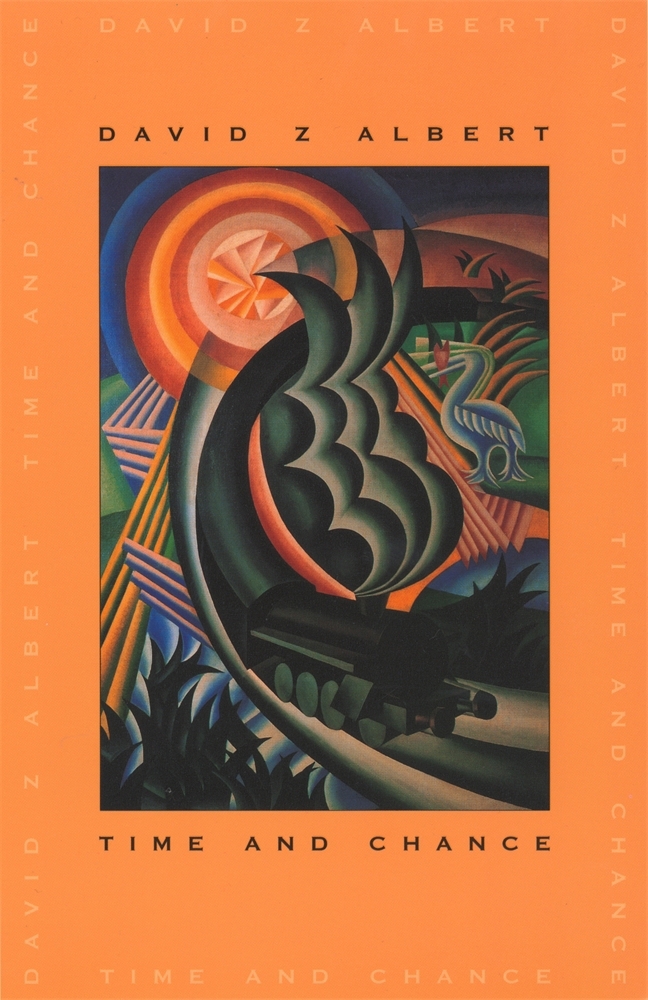
A gas forgets its corner.
Remove the partition. Nothing tells a particle to spread out. So why does the gas do it?
S = kᵦ ln Ω
Spreading does not use up energy.
For an equilibrium sample: (½)ᴺ.
Compare 8 particles with 512. Small systems visibly fluctuate. Large imbalances become much less likely as the number grows.
Inside this model
Non-interacting classical point particles move in a two-dimensional box and reflect elastically. Particle dots are enlarged for visibility; they do not collide with one another. This illustrates free expansion and reversible mechanics, not complete molecular thermalization.
We count only left/right occupancy: Ω = N! / (Nᴸ! Nᴿ!) and S/kᵦ = ln Ω, up to a constant. The displayed entropy is a coarse positional contribution, not the full phase-space entropy. A new microstate samples different positions and velocities; it is not a new law of motion.
Reversal changes all velocities and evolves the actual particles back to the state at release, within floating-point precision. It is not a recording played backward. The equilibrium probability 2⁻ᴺ assumes independent, uniformly distributed positions; it is not a return-time estimate.
Reading: Albert, ch. 2, pp. 27-34; ch. 3, pp. 35-36, 43-51, 70. The reversal question continues in ch. 4, pp. 71-75.
Ω at an even split: exp(108.1)
Energy is not the same as possibility.
Connect a hot body to a cold one. Let heat flow, or make it do some work along the way.
Initial energy: 800 J. Always conserved.
Initially 107.2 J of potential.
No engine: the potential is dissipated.
Run both paths from the same temperatures. The engine leaves the reservoirs cooler, because some energy is now stored as work. Then try equal starting temperatures.
Inside this model
Two uniform bodies have equal, constant heat capacities of 1 J/K and exchange no heat with an exterior. Their modeled thermal energy is U = Tᴬ + Tᴮ joules, using a fixed reference. Passive heat flow follows dQ/dt = g(Tᴬ − Tᴮ); ΔS = ln(Tᴬ/Tᴬ₀) + ln(Tᴮ/Tᴮ₀) J/K.
The engine is the ideal reversible limit, approached infinitely slowly in real thermodynamics. Its on-screen speed is illustrative. TᴬTᴮ stays constant, the final temperature is √(Tᴬ₀Tᴮ₀), and stored work equals the decrease in reservoir energy. The maximum remaining work is Tᴬ + Tᴮ − 2√(TᴬTᴮ). No external cold bath is assumed.
Passive contact instead ends at the arithmetic mean. Equal temperature removes this thermal opportunity; it does not remove work that the engine has already stored. Real engines create entropy and capture less work. The animation pauses when the temperature difference is below 0.2 K; this is a display threshold, not exact equality.
Reading: Albert, ch. 2, pp. 24-34; appendix, pp. 165-170. The finite-reservoir equations are a teaching implementation of those principles.
Give a world nowhere to lose its heat.
No outside. No new fuel. Just a finite supply of temperature differences, and time.
Still here. Still conserved.
Maximum work from ideal reversible engines.
Temperature range: 1675.6 K.
Give the world a different beginning. Make its thermal contact faster or slower. With contact enabled, does either choice rescue its temperature differences?
Inside this model
This is a finite heat-diffusion model, not a cosmological simulation. Each of the 128 cells has constant heat capacity 1 J/K. Heat passes only between adjacent cells; no energy crosses the outside boundary. Every preparation has the same mean temperature, 300 K, and total thermal energy, 38,400 J.
Pairwise heat transfer is proportional to temperature difference. Conservative substeps keep temperatures positive and ΔS = Σ ln(Tᵢ/Tᵢ₀) nonnegative. The potential work is ΣTᵢ − N exp(Σln Tᵢ/N), the ideal work obtainable by reversibly bringing all cells to a common temperature. Passive diffusion captures none of it.
Changing the beginning resets the system. Changing contact or playback speed preserves its current state. The color scale stays fixed across time and clips above 2,000 K; the equations do not. The model pauses below 0.05 J of remaining potential, a display threshold rather than literal equality. This continuum model omits microscopic fluctuations and recurrences.
Reading: Albert, ch. 2, pp. 31-34; ch. 3, pp. 48-51, 70. Cosmic expansion, gravity, stars, black holes, and dark energy are outside this model.
A conditional future,
not a countdown.
The universe has no outside.
In the finite world, heat death looks surprisingly ordinary. The energy is still there. The differences that could make something happen are gone.
That is the thermodynamic idea behind a possible cosmic ending: accessible sources of free energy become exhausted, leaving progressively less capacity to sustain work. It need not mean absolute zero, or particles that stop moving.
Finite fuel supports light and local activity.
Long-lived objects outlast the stellar era.
Accessible energy differences dwindle.
A box does not establish the fate of the cosmos. This extrapolation depends on continued expansion and the behavior of dark energy, gravity, and black holes. Cosmic entropy is not simply a map of temperatures, and a uniform early universe can have low gravitational entropy. These experiments do not model those effects. Adams & Laughlin, 1997 ↗ NASA on the universe’s fate ↗
But why was there a difference to begin with?
Every reset gave the experiments a special starting condition. The equations did not choose it. Reversing all the gas velocities makes that distinction visible: reversible laws alone do not select a future-directed arrow of time.
Albert develops this difficulty in chapter 4 and introduces the Past Hypothesis, a low-entropy boundary condition for the early universe. The experiments above explore consequences of prepared beginnings. They do not explain the universe’s beginning.
Reading: Time and Chance, ch. 4, pp. 71-96. This extends the thermodynamics and statistical mechanics of chapters 2 and 3.
Record what changed in the experiments.
Compare free expansion, heat exchange, and work extraction. Use these notes to record what changed when you adjusted the initial conditions or reversed the gas velocities.
Your observations
Let an experiment unfold. Observations will collect here as you reach its turning points.
0 observations recorded.
Private to this browser. Nothing you write here is sent anywhere.